Instrumental Hopscotch
Interactive Installation, 2022
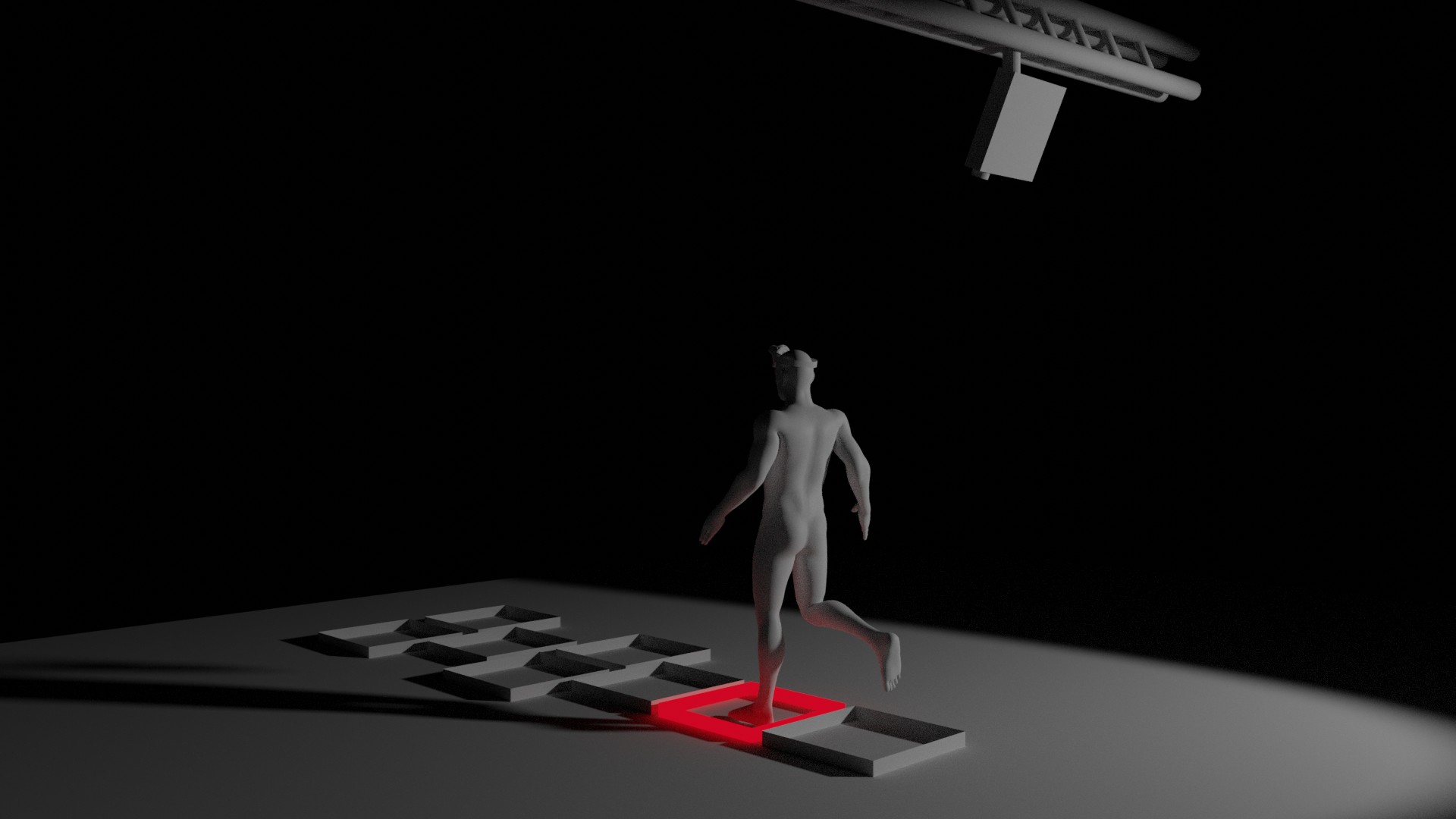
In this experience, the concept of traditional games from our childhood was used, with the goal of transforming them into something more interactive by employing synesthesia and exploring Gestalt principles. In hopscotch, the objective is to hop on one foot across the squares and pick up the stone on the ground without losing balance. On the return trip, the player must retrieve the stone without falling or stepping on the lines. The player who can secure the most squares wins
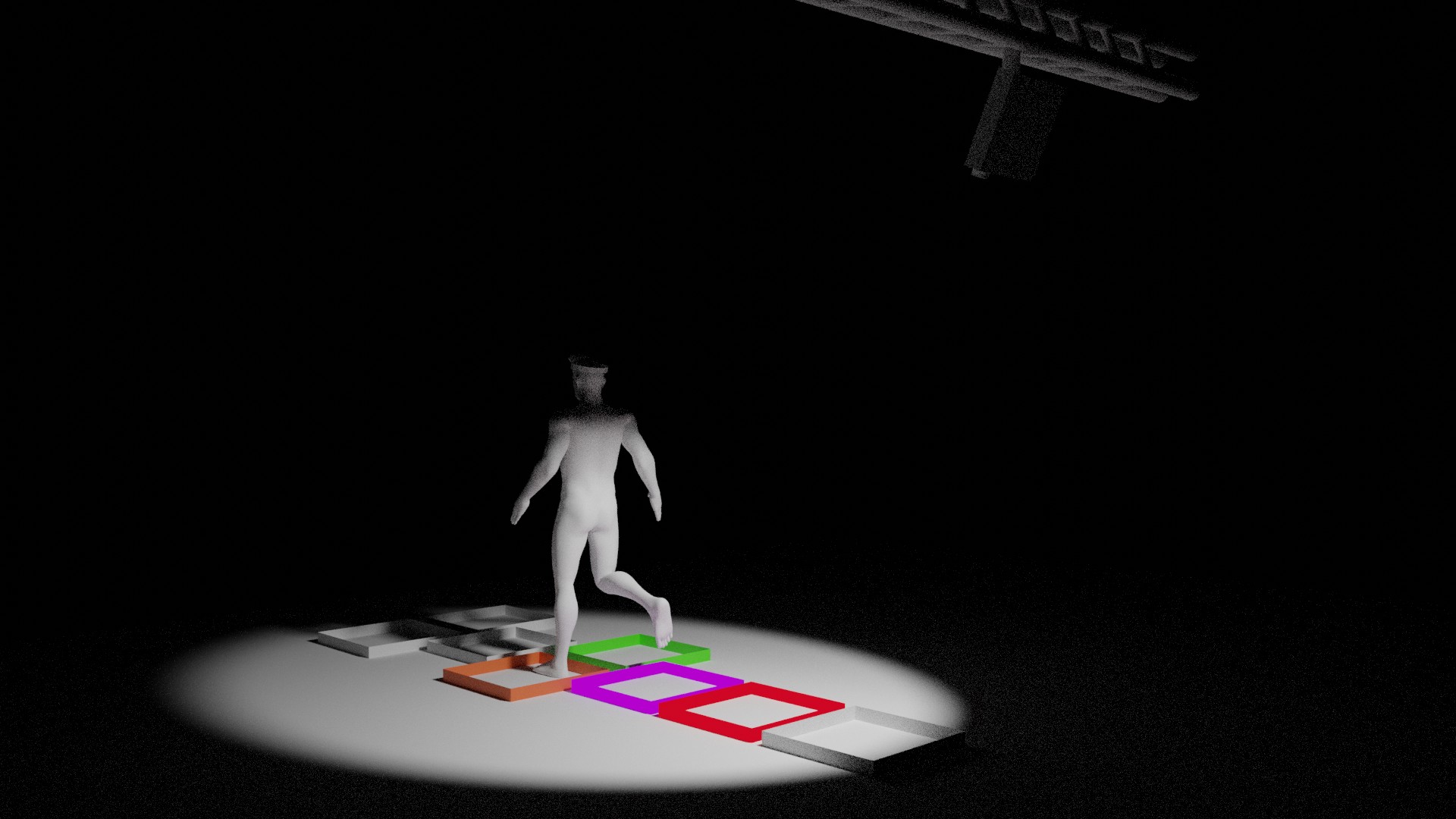
In this project, the hopscotch game will have a different concept. The goal is to merge this traditional game with the sounds of traditional instruments that were, and still are, used to introduce children to music (such as triangle, reco-reco, drum, tambourine, xylophone, flute, etc.), which evoke childhood memories. In summary, the user is meant to jump from square to square, locking each one, which also blocks the sound, thereby creating a kind of orchestra. Each square will emit both a sound and a corresponding color based on the sound heard.
To create a synesthetic experience, each instrument's sound will have a color associated with it, meaning each instrument can be linked to different colors. A person hearing a specific instrument can associate it with a particular color. While the experience is idle or in stand-by mode, the program will project the hopscotch game, randomly filling the squares with white color based on data from the cloud—specifically data about global birth rates. When movement is detected through the VIVE tracker, the program will project the game so the user can experience it.
This project was developed by João Lopes, Diogo Nóbrega and António Duarte at ESMAD, P. Porto.
Software used: Touch Designer and Node-Red
Project Model